
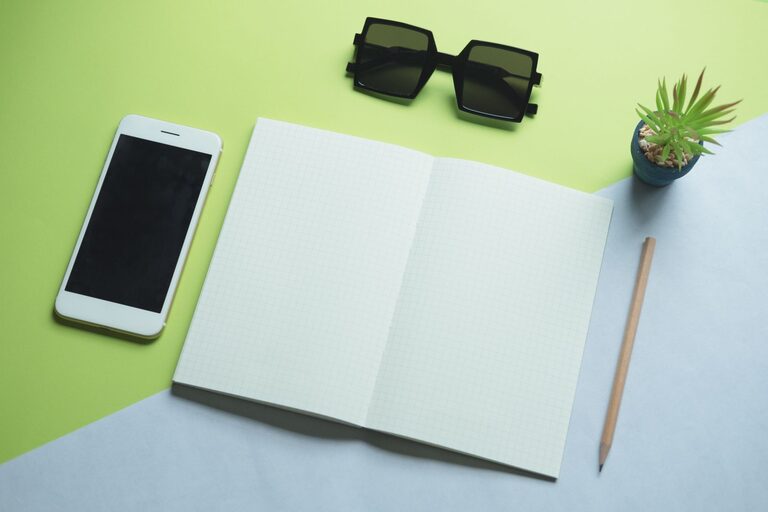
A notebook can be a simple place for ideas, lists, sketches, plans, and reminders. Yet many notebooks end up on a shelf with only a few pages filled. Often, the problem is not a lack of motivation. The notebook may be the wrong size, have unsuitable paper, or be designed for a style of writing that does not match your daily habits.
The best notebook is not necessarily the most expensive or attractive one. It is the notebook you can reach for easily, use comfortably, and understand at a glance. Here is how to choose one you will actually use.
Start With How You Plan to Use It
Before comparing covers, paper, or page layouts, decide what you want the notebook to do. A notebook for quick work notes has different needs from one used for drawing or long-form journaling.
Consider your most common tasks:
– Writing daily to-do lists
– Recording meeting or class notes
– Capturing creative ideas
– Keeping a journal
– Planning projects
– Sketching or doodling
– Tracking habits or personal goals
– Collecting recipes, quotes, or useful information
You may need more than one notebook if these activities require very different layouts. However, starting with one main purpose can make it easier to choose a practical design and build a consistent habit.
If you are not sure, choose a general-purpose notebook with a comfortable size and a simple layout. You can discover your preferred system through regular use.
Choose a Size That Fits Your Routine
Notebook size affects how often you carry and open it. A large notebook provides plenty of space, but it may stay at home. A small notebook is easy to carry, but its pages may feel cramped.
Small notebooks
Small notebooks work well for:
– Quick reminders
– Shopping lists
– Short notes
– Pocket journaling
– Carrying in a small bag or coat pocket
They are convenient, but they may not be ideal for detailed notes or long writing sessions. If your handwriting is large, a very small notebook can quickly become frustrating.
Medium notebooks
Medium notebooks are often the most versatile choice. They usually provide enough room for writing while remaining easy to carry in a backpack, tote, or work bag. They are suitable for planning, journaling, study notes, and everyday lists.
Large notebooks
Large notebooks are useful when you need generous writing space. They work well on a desk for project planning, drawing, detailed notes, and longer entries. The main drawback is portability. If you choose a large notebook, decide where it will live so it remains easy to access.
A useful test is to imagine carrying the notebook for a full day. If that sounds inconvenient, choose a smaller option.
Pick the Right Page Layout
The page layout should support your natural writing style rather than force you to change it.
Lined pages
Lined pages are a dependable choice for sentences, lists, and notes. They provide structure without requiring a particular planning method. Look at the spacing between lines, especially if you write with large letters or use a thick pen.
Dot grid pages
Dot grid paper offers subtle guidance for writing, charts, boxes, diagrams, and simple planning systems. The dots are usually less distracting than solid lines, making this layout popular for flexible organization.
Graph pages
Graph paper is useful for tables, measurements, diagrams, and neatly arranged notes. It can also help you keep handwriting aligned. For ordinary journaling, however, the grid may feel busier than necessary.
Blank pages
Blank pages are best for drawing, visual thinking, mind maps, and free-form notes. They provide the most freedom but the least structure. If you often struggle to begin, a completely blank page may feel intimidating.
Mixed layouts
Some notebooks combine different page styles or include sections for lists, calendars, and notes. These can be helpful if you enjoy built-in organization, but make sure the format matches your needs. Extra features are only useful when you will use them.
Pay Attention to Paper Quality
Paper affects how enjoyable a notebook feels. A smooth page can make writing more comfortable, while rough paper may work better with pencils or certain pens.
Think about the tools you already use:
– Ballpoint pens often work well on most paper.
– Gel pens may need paper that dries quickly.
– Fountain pens and markers usually need thicker paper to reduce show-through.
– Pencils work on nearly any paper but may feel better on a slightly textured surface.
If possible, test a few pages before buying. Write several lines, make a quick list, and turn the page to check whether ink shows through. A little show-through may not bother you, but heavy bleeding can make the notebook unpleasant to use.
You do not always need premium paper. The right paper is simply paper that works with your favorite writing tools and feels comfortable under your hand.
Consider Binding and Durability
The binding determines how the notebook opens and how well it holds up over time.
A notebook that lies flat is helpful for longer writing sessions. Spiral bindings often open easily and provide a flat writing surface, but they can be less convenient to store or carry. Sewn bindings may be durable and attractive, while glued bindings can be slimmer and more affordable.
Also consider the cover. A flexible cover is lightweight and easy to pack. A hard cover offers more protection and can provide a firm surface when you are writing without a desk.
Choose durability based on your routine. A notebook used at home may not need a tough cover. One carried daily in a busy bag may benefit from stronger construction and protected corners.
Make It Easy to Reach
Even a perfect notebook will not be used if it is hidden away. Give it a regular home that matches its purpose.
You might keep:
– A work notebook beside your keyboard
– A journal on your nightstand
– A planning notebook near your calendar
– A small idea notebook in your everyday bag
– A household notebook in a central room
If you want to use the notebook daily, reduce the number of steps between noticing a need and writing something down. Keep a pen with it, and avoid placing it under papers or in a drawer.
Avoid Buying for an Ideal Version of Yourself
It is easy to choose a notebook for the person you hope to become rather than the person you are now. A detailed planner may look inspiring, but it will not help if you dislike filling in multiple sections every day. A notebook with narrow lines may look elegant but feel uncomfortable if you prefer large, quick writing.
Choose based on your actual habits:
– If you write in short bursts, use a portable notebook.
– If you make diagrams, choose dot grid or blank pages.
– If you often forget tasks, select a notebook with room for clear lists.
– If you like reviewing your thoughts, choose a comfortable journal-sized format.
– If you switch between writing and sketching, look for flexible pages.
A simple notebook used consistently is more valuable than an impressive notebook that creates extra work.
Give Yourself a Simple Starting System
Once you choose a notebook, make the first page easy to use. You could write the date, add a short title, and begin with one task or idea. There is no need to create a perfect system before making the first entry.
For general notes, try this simple format:
- Write the date at the top.
- Add a brief title or topic.
- Use bullets for separate ideas.
- Mark important actions clearly.
- Review the page when the information is no longer fresh.
Do not worry about keeping every page beautiful or perfectly organized. A notebook is a tool, not a performance. Cross-outs, unfinished lists, and quick notes are signs that you are using it.
The Best Choice Is the One You Will Open
Choosing a notebook comes down to fit. The right size, page layout, paper, binding, and location should make writing feel convenient. Start with your real habits, select only the features you need, and keep the notebook within easy reach.
You can always adjust your choice later. Your preferences may change as you use different formats, and that is part of finding a system that works. The goal is not to own the perfect notebook. It is to have a notebook that helps you think, remember, and create with less effort.